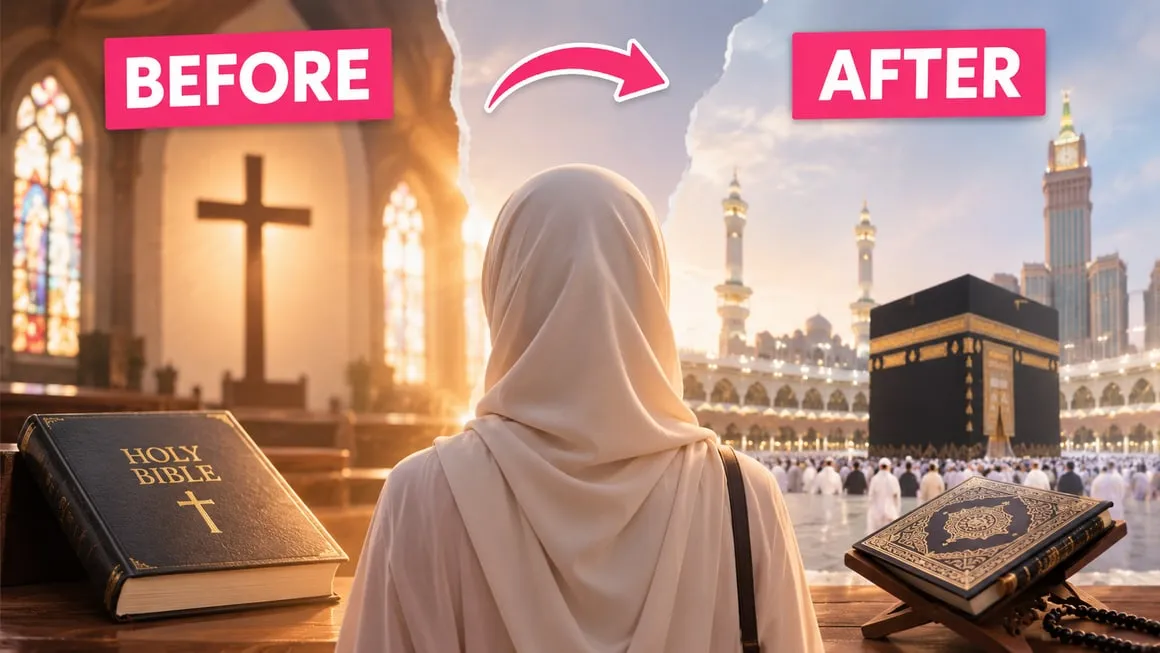
Why I share my journey
This experience is also part of why I started sharing my thoughts through Last Dawn from the West.
I want to discuss modern life and society through an Islamic perspective, practical Muslim personal transformation, and Islamic reflection and belief. I want to question the things we take for granted, examine the habits that shape our lives, and talk about what it actually means to live intentionally as a Muslim.
Not everything I discuss will be comfortable. Some questions deserve to be asked, even when the answers challenge what we have always believed. I’m still learning, still reflecting, and still trying to become a better servant of Allah.
If you want to live more intentionally as a Muslim, consider subscribing to my YouTube channel.
You can also join my email list if you’d like to receive occasional reflections and updates from me.
May Allah guide us to the truth, give us the courage to recognize it even when it challenges everything we once believed, and keep our hearts firm upon His religion.
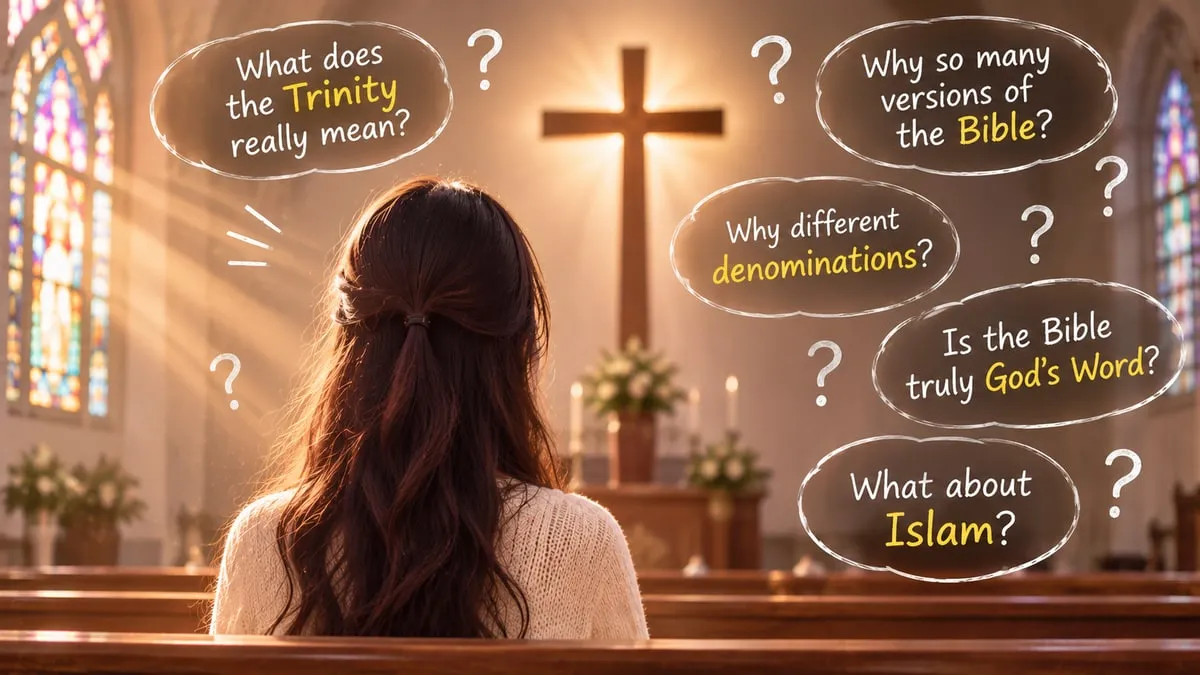
For a long time, I thought I was simply being a good Christian. I grew up believing that having faith meant trusting God, listening to the people who taught me about Him, and strictly following the teachings passed down to me. I was raised in the Seventh-day Adventist Church, and for most of my life, I simply accepted what the people around me believed. I didn’t question the foundations of Christianity, let alone examine them for myself.
In retrospect, I was following the crowd without having much understanding of what I was actually following. I had very little independent reasoning when it came to religion. I was taught to listen and obey, not to challenge what I was told. And honestly, I didn’t think much of it at the time. Because I wanted to be a good Christian, so I thought doing what everyone else did was the right thing.
However… that doesn’t mean everything made sense to me.
There were plenty of things that confused me, especially when I opened certain chapters of the Bible. I had questions about the Trinity, about Jesus being God, about the different explanations Christians gave for the same fundamental beliefs, and about why there were so many versions of the Bible in the first place.
I also wondered what actually made my denomination different from the others. If we were all reading the same Bible, why were there so many denominations with different interpretations? Why did one Christian explain the Trinity one way while another explained it differently? And why was I expected to accept these explanations when I couldn’t even make proper sense of them?!!
I had convinced myself that perhaps I wasn’t supposed to understand everything because God was almighty and beyond human understanding. If something confused me, maybe I just needed more faith. That was easier than admitting that the explanations I had been given weren’t convincing me.
There was also a very familiar understanding of salvation that shaped how I viewed Christianity. John 3:16, believing in Jesus, and getting baptised were often treated as the essential foundations. Once those boxes were ticked, it seemed that knowing the deeper details of the Bible wasn’t necessarily something everyone felt compelled to pursue.
Besides, at that time, the Bible was the only religious source I knew. I regarded it as God’s Word and had no real reason to look elsewhere. Islam barely crossed my mind. My exposure to Muslims was extremely limited, and much of what I had heard about Islam came from the negative media coverage surrounding terrorism and violence. I had never seriously considered opening the Quran, let alone imagined that it would eventually change my entire understanding of God.
The irony: I studied Christianity to convert a Muslim, but ended up becoming one myself
Things began to change when I started discussing religion with someone who would eventually become my husband. He was Muslim, and I was so determined to convince him to become Christian that I spent late nights drafting an essay, stating all the proofs that I found were eye-opening to him. Alhamdulillah. If I hadn’t been so determined to convert him, I might never have studied Christianity as seriously as I did, even to a point it completely shifted my religious belief and made me become a Muslim as today.
It took me until around a year ago to actually sit down and study the Bible seriously, questioning my beliefs more than I ever had before. I returned to passages I had heard in church, examined their wording, and tried to understand what they were actually saying instead of simply accepting the interpretations I had been given through sermons. And who would believe… the more I studied the Bible to defend Christianity, the less convinced I became.
That was what led me to explore a question in my video: Is the Bible the Word of God?
I also began looking into the one promised or mentioned in the Bible, and how Muslims understand those passages in relation to Prophet Muhammad ﷺ. I explored that subject in another video: How the Bible convinced me of the Oneness of God.
I started looking closely at Jesus’ own words, particularly the passages where he spoke about the Father and his relationship with Him. I struggled to reconcile the belief that Jesus was equally God with the things he said about depending on the Father and being unable to do anything by himself. I had heard explanations of the Trinity countless times, but I still couldn’t make sense of it. Even when I asked people in my own family, I couldn’t get an explanation that genuinely resolved my confusion.
And this is something I found frustrating: many Christians around me seemed to know the familiar teachings about salvation, particularly John 3:16, but had very little understanding of the deeper theological foundations of their own religion. The answer often came back to the same thing: just believe. Don’t question too much. But why?
If the Trinity is such a fundamental belief,..
- Shouldn’t Christians be able to explain what it actually means?
- If Jesus is God, shouldn’t we be able to examine his own words and understand how they support that belief?
- Why should asking these questions be treated as a lack of faith?
My husband started asking me exactly these kinds of difficult questions. He pointed me towards Bible passages I had never seriously considered, sometimes even passages I was preparing to use against him in our debates. He would explain how they could be understood from another perspective. And what shocked me was that these weren’t even unfamiliar verses. They were passages I had already read or heard before. But once I looked at the actual wording instead of automatically accepting the explanations I had been taught, I started noticing things puzzling altogether and I was almost at the dead-end to refute anything from his reasoning.
And the more I examined the teachings of Jesus, the more I kept coming back to the Oneness of God.
I struggled to find the clear biblical foundation for the idea that God was three persons, yet the emphasis on God as One kept appearing in the very teachings I was reading.
Eventually, I reached a point where I couldn’t simply overlook the problem. If I couldn’t confidently defend the fundamental concept of God in the religion I followed, how could I continue accepting everything else without questioning it? I began to seriously doubt whether Christianity was the truth I had always assumed it was.
The turning point where I first opened the Quran
When I began learning about Islam, I was genuinely surprised by how much clarity I found in the concept of Tawheed: the absolute Oneness of God. I honestly wondered why nobody had ever introduced Islam to me in this way before. Nobody in my circle had seriously discussed it with me. I had barely been exposed to the actual teachings of Islam, and everything I thought I knew about Muslims had largely come from what I had seen in the media. So when I finally started reading the Quran, I was amazed.
For the first time, I was looking at the teachings of Jesus alongside the Islamic understanding of God. And instead of finding something that contradicted the questions I had been struggling with, I found that the Quran addressed those questions at their very foundation. Worship one God. Allah has no equal, no partner, and no one who shares His divinity. The Creator is not His creation. It was so clear even a 6-year-old could comprehend it!
The Quran presented these foundations in a way that I could understand without having to force myself to reconcile ideas that seemed contradictory. Its message aligned with something I had always felt deep down: that the One worthy of worship must be absolutely unlike His creation. He doesn’t need a partner, an equal, or anyone to share His divinity. I had spent so long trying to make sense of the idea that God could be three persons but one God. Then I encountered Tawheed, and the foundation of worship became clear to me in a way it never had before. It felt as though I had finally found the answers to questions I had carried for years.
How much of our faith do we actually understand?
So much of church life revolved around singing, praising God, listening to sermons, donating, and tithing. Week after week, these activities became familiar routines. But how much time were we actually spending understanding the Bible? How many people could explain the foundations of their own beliefs without simply repeating what their pastors had told them?
Singing and praising God are not inherently wrong, but they cannot replace understanding the scripture that supposedly guides your faith. And I became increasingly uncomfortable with how little I had known about the Bible I had spent my life defending. I wanted to understand why there were so many versions and translations, how the text had been transmitted, and what that meant for the reliability of the scripture I had always regarded as God’s Word. I wanted to know what had been preserved, what had changed, and how anyone could confidently claim that the Bible in their hands represented the original revelation without examining its history.
I also began comparing my previous relationship with the Bible to the importance Muslims place on the Quran. Memorisation, recitation, learning, and returning to the Quran are deeply embedded in Muslim religious life. It made me question why I had spent so little time learning the Bible when it was supposedly the foundation of my faith.
Why had I been so comfortable knowing so little? I don’t think religious sincerity should be measured by how loudly someone sings, how regularly they attend church, or how much they donate. If we claim to follow a revelation from God, shouldn’t we be making an effort to understand what it actually says?
Becoming Muslim was the beginning, not the end
The reason I became Muslim was because, after examining what I had believed and learning about Islam, I became convinced that Tawheed was the truth. And it’s always been since I was young.
The distinction between Allah and His creation, the absolute Oneness of God, and the message of the prophets finally gave me a foundation I could understand and wholeheartedly believe in. Jesus, peace be upon him, is a noble messenger of Allah, not God Himself. Muhammad ﷺ is the final messenger. And Allah alone deserves our worship.
For the first time, I felt that I no longer had to force myself to believe something I couldn’t make sense of. I could worship Allah without trying to reconcile His absolute Oneness with the idea of multiple divine persons. Of course, becoming Muslim didn’t mean I suddenly became knowledgeable. I still have so much to learn. I still make mistakes, struggle with my own shortcomings, and have a long way to go in becoming the Muslim I want to be.
And that is still what I’m trying to do today.
Originally published on Niyyah Library’s Payhip journal.

About Karima Nguyen
Karima writes about her journey to Islam and creates practical learning resources at Niyyah Library.
Meet KarimaContinue exploring
- How The Bible Convinced Me of Tawheed On YouTube